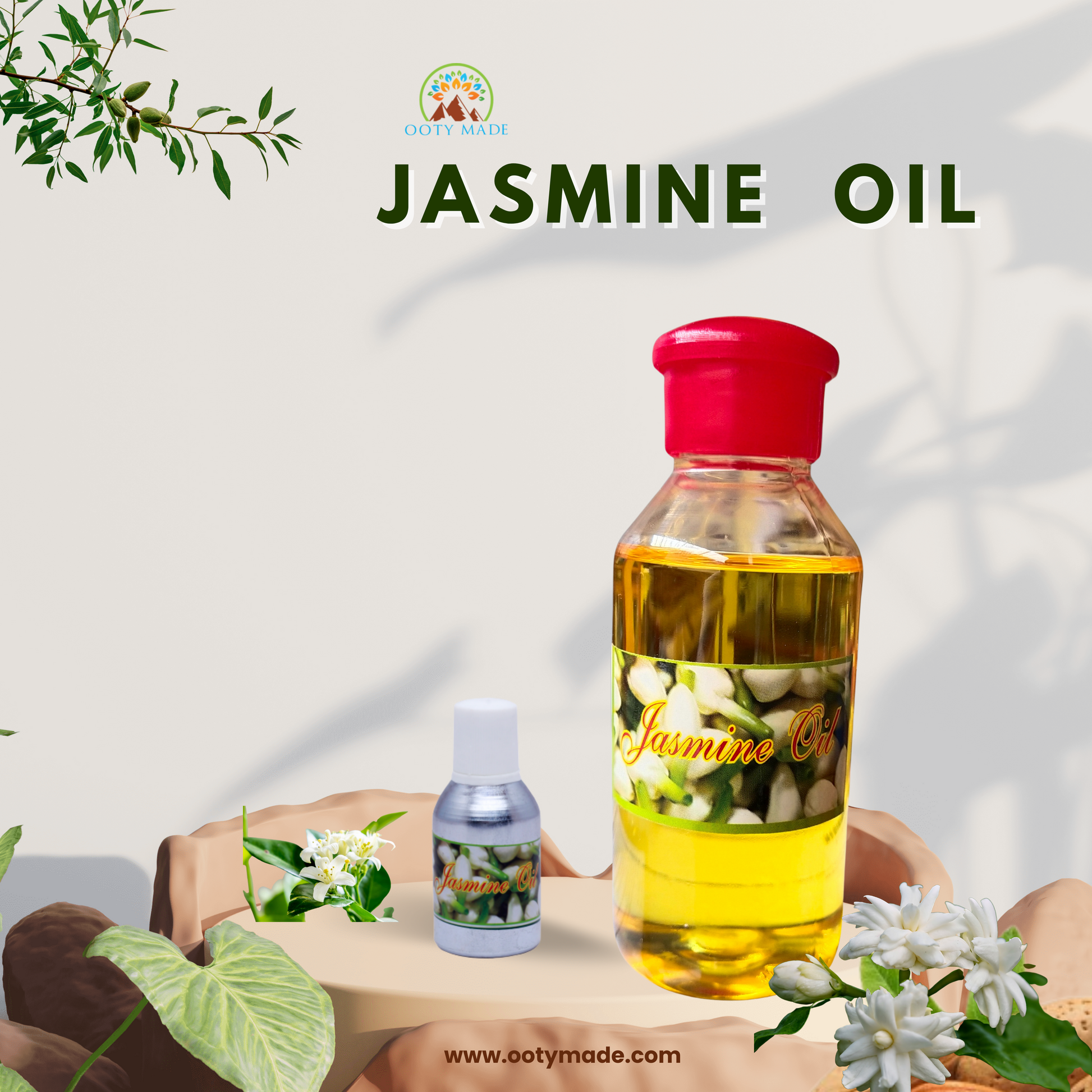
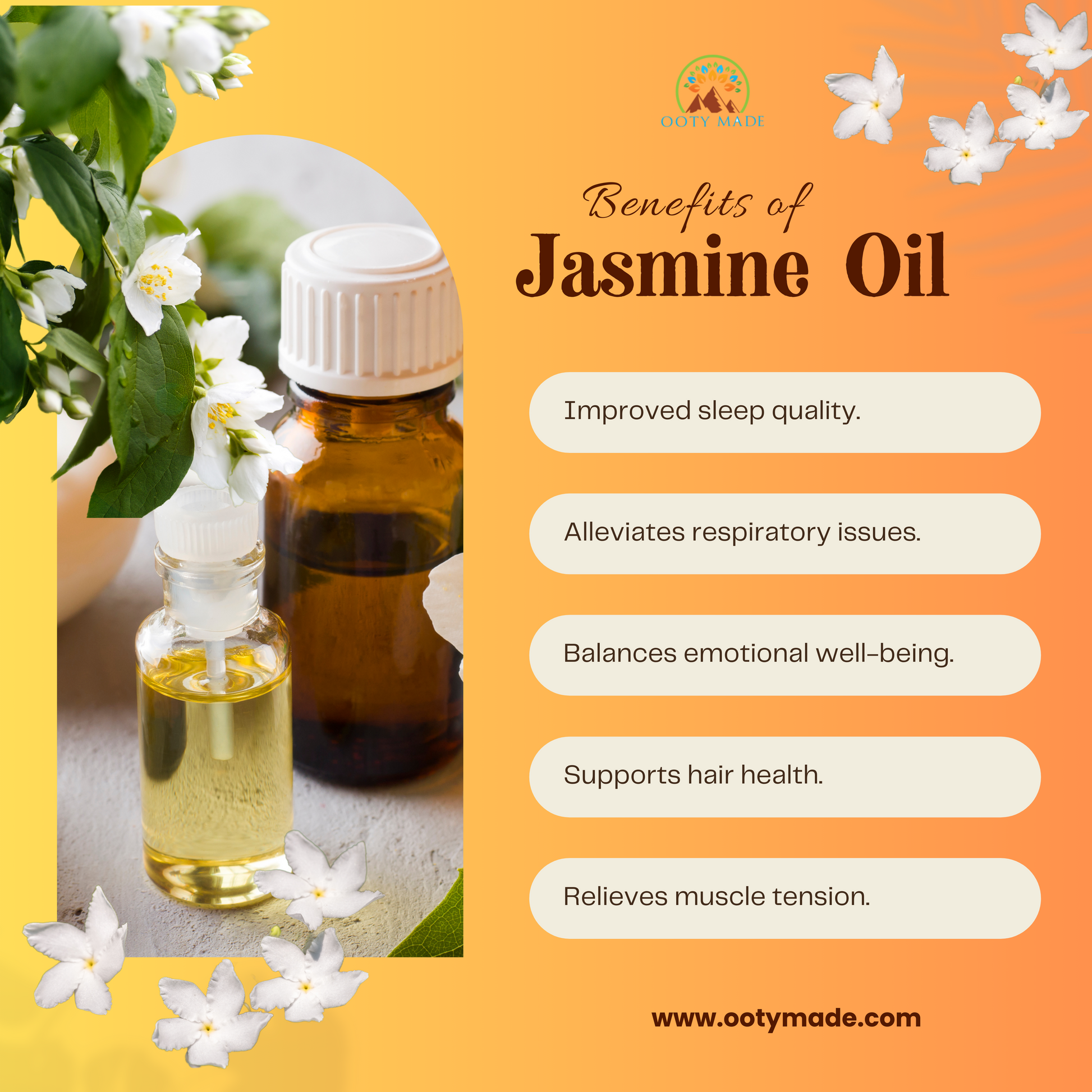
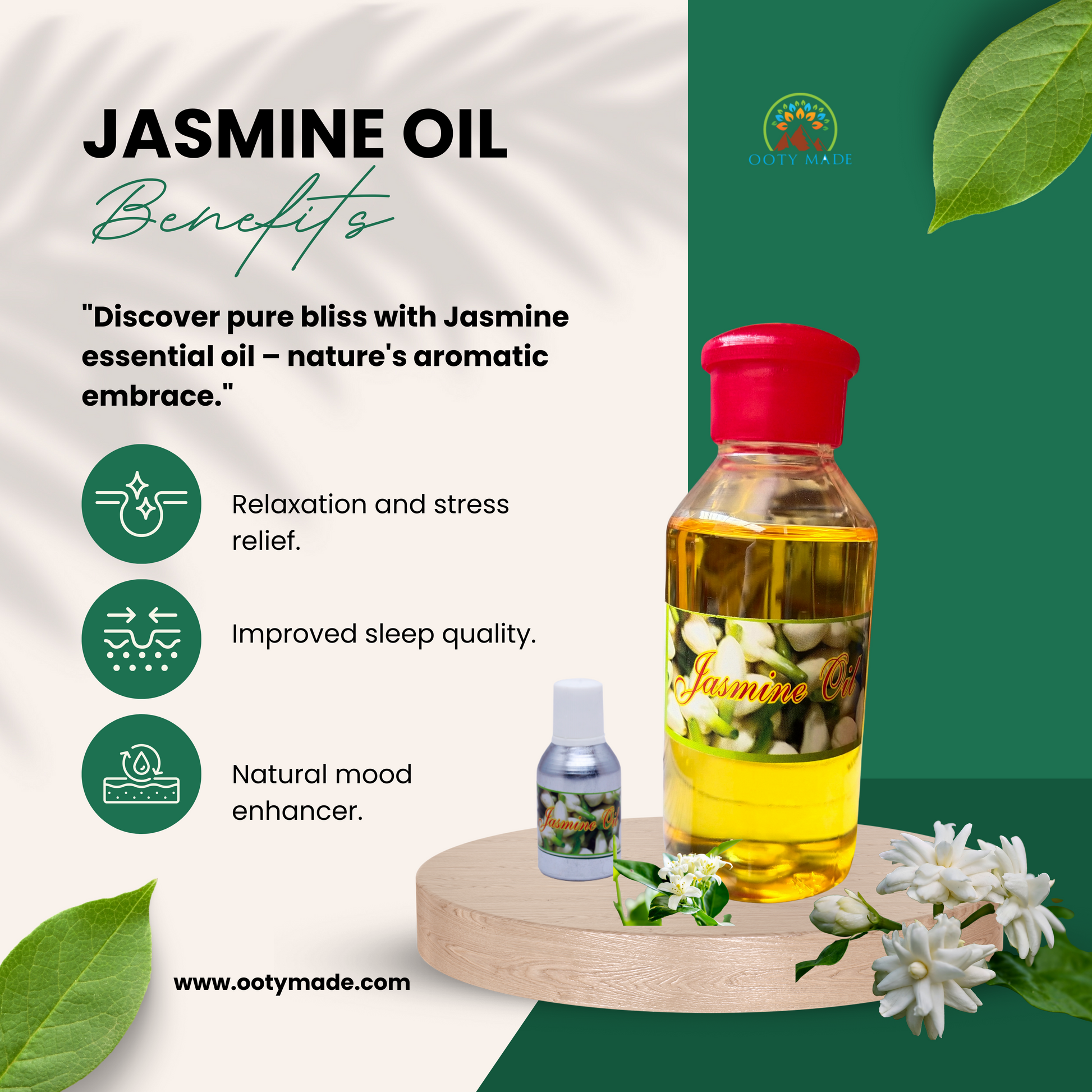
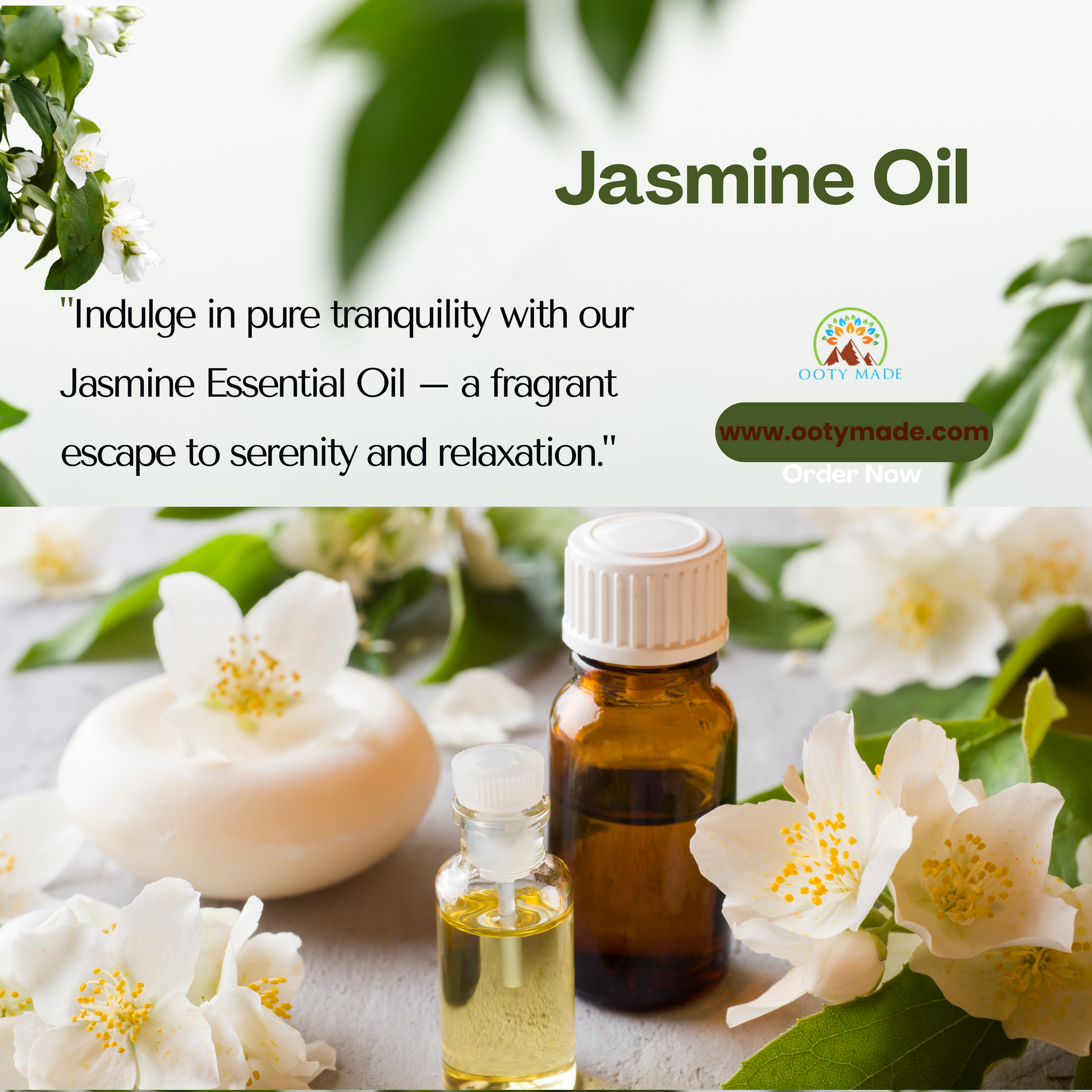
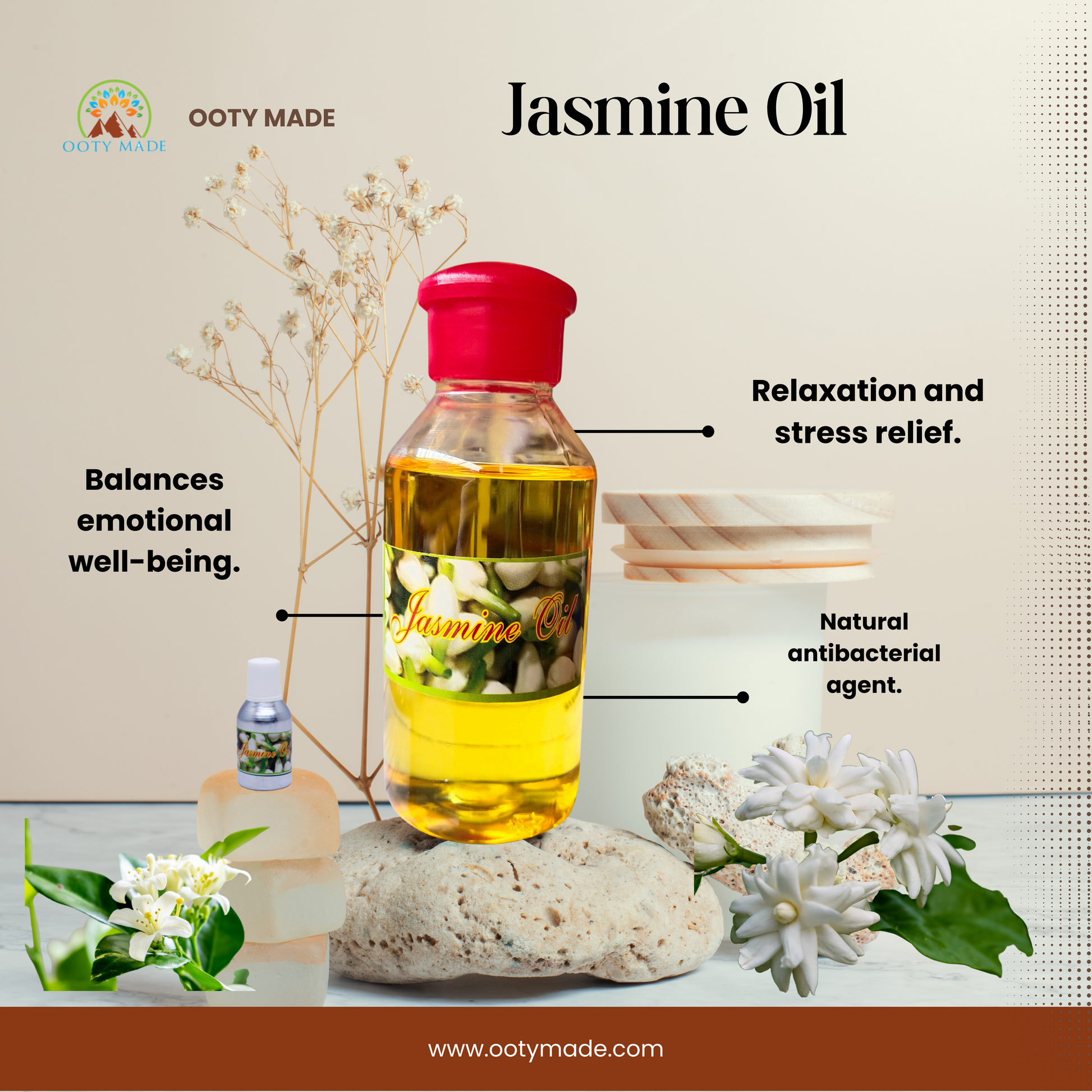
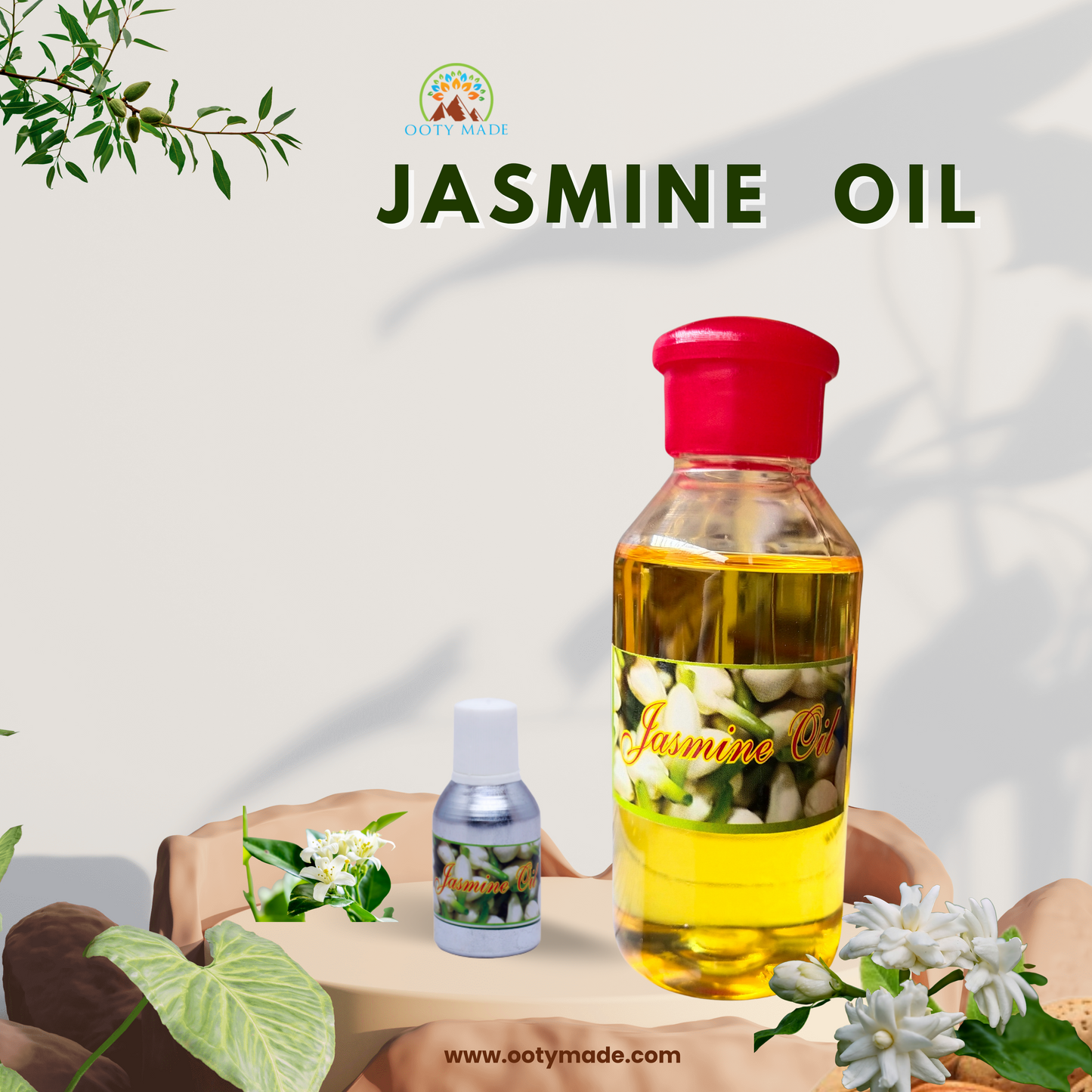
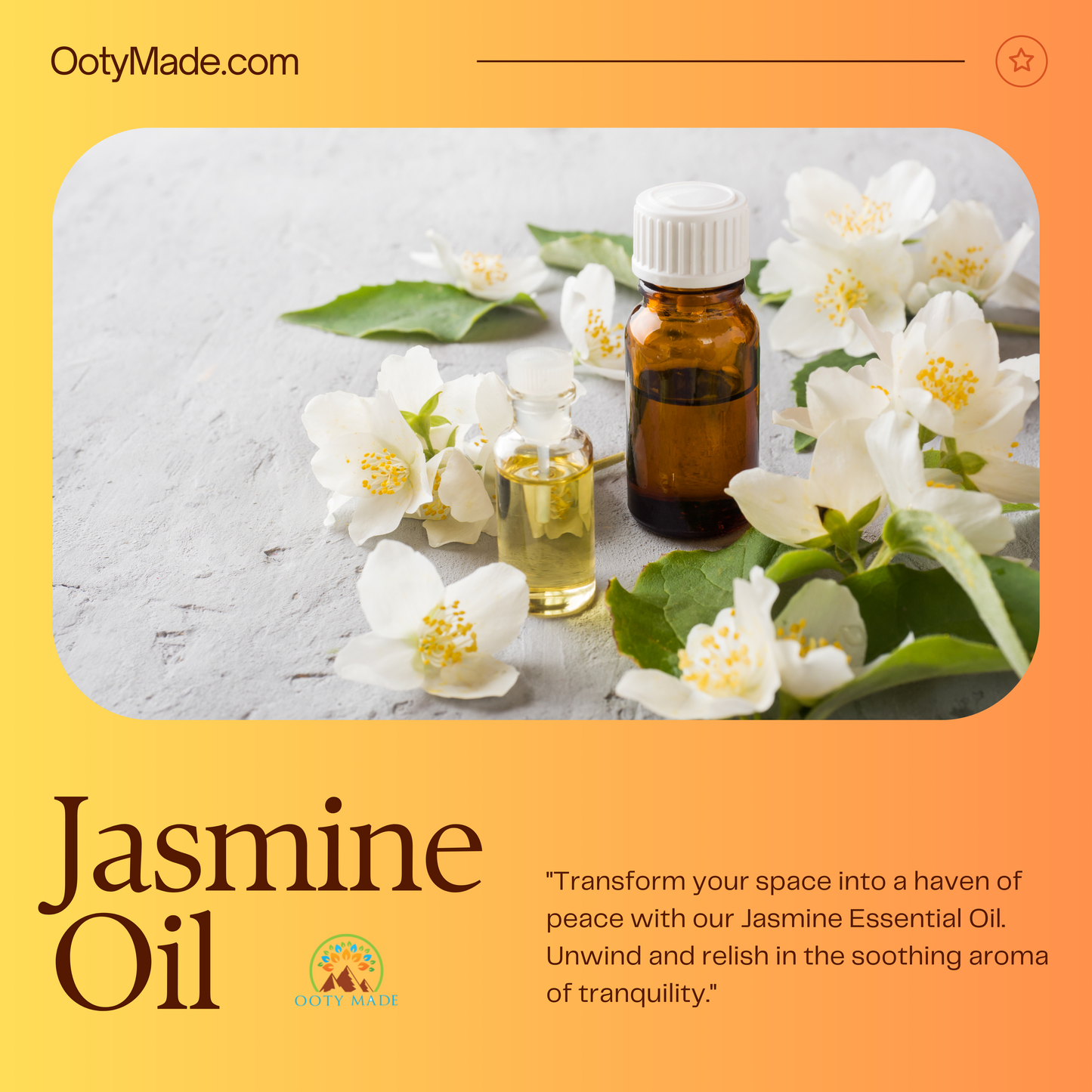
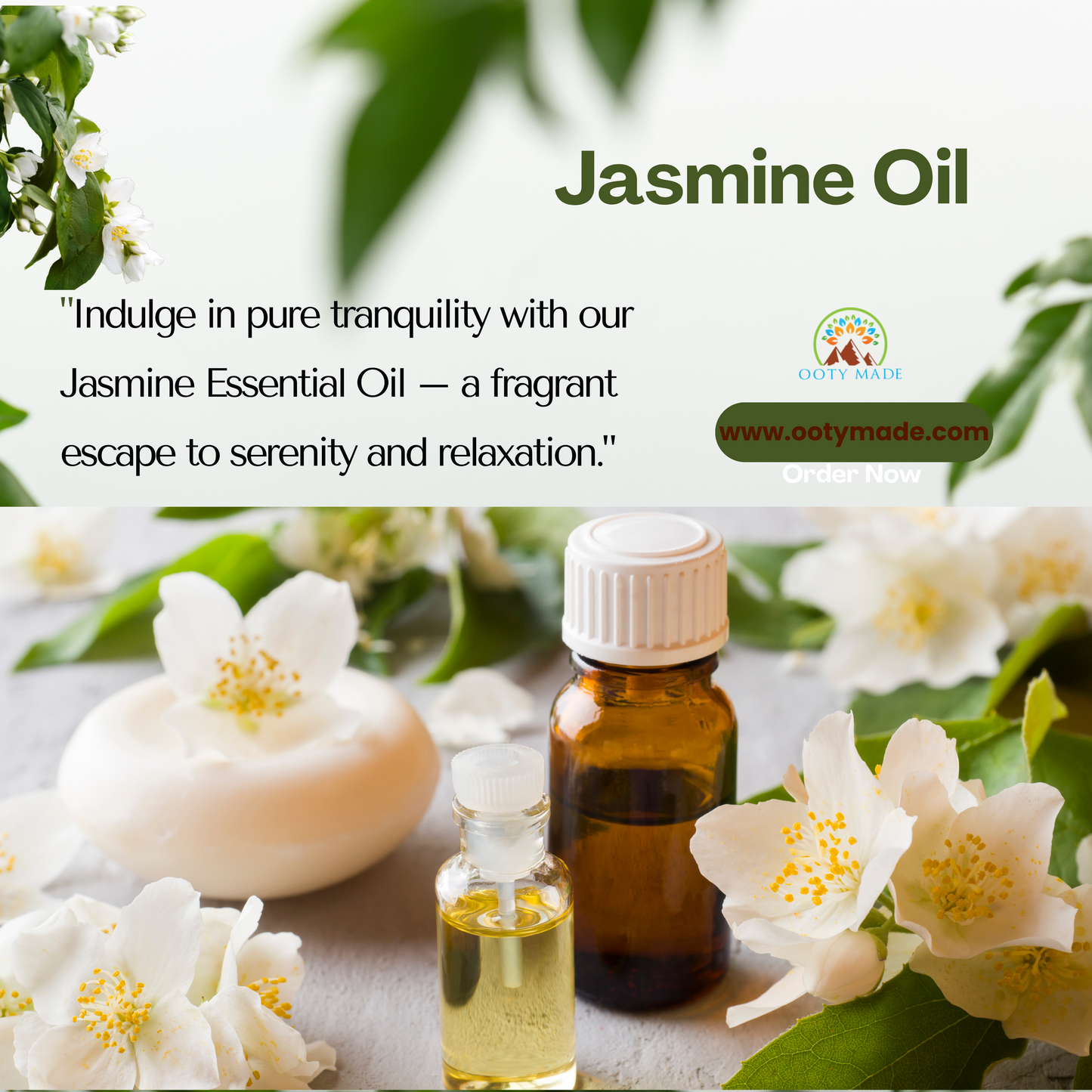
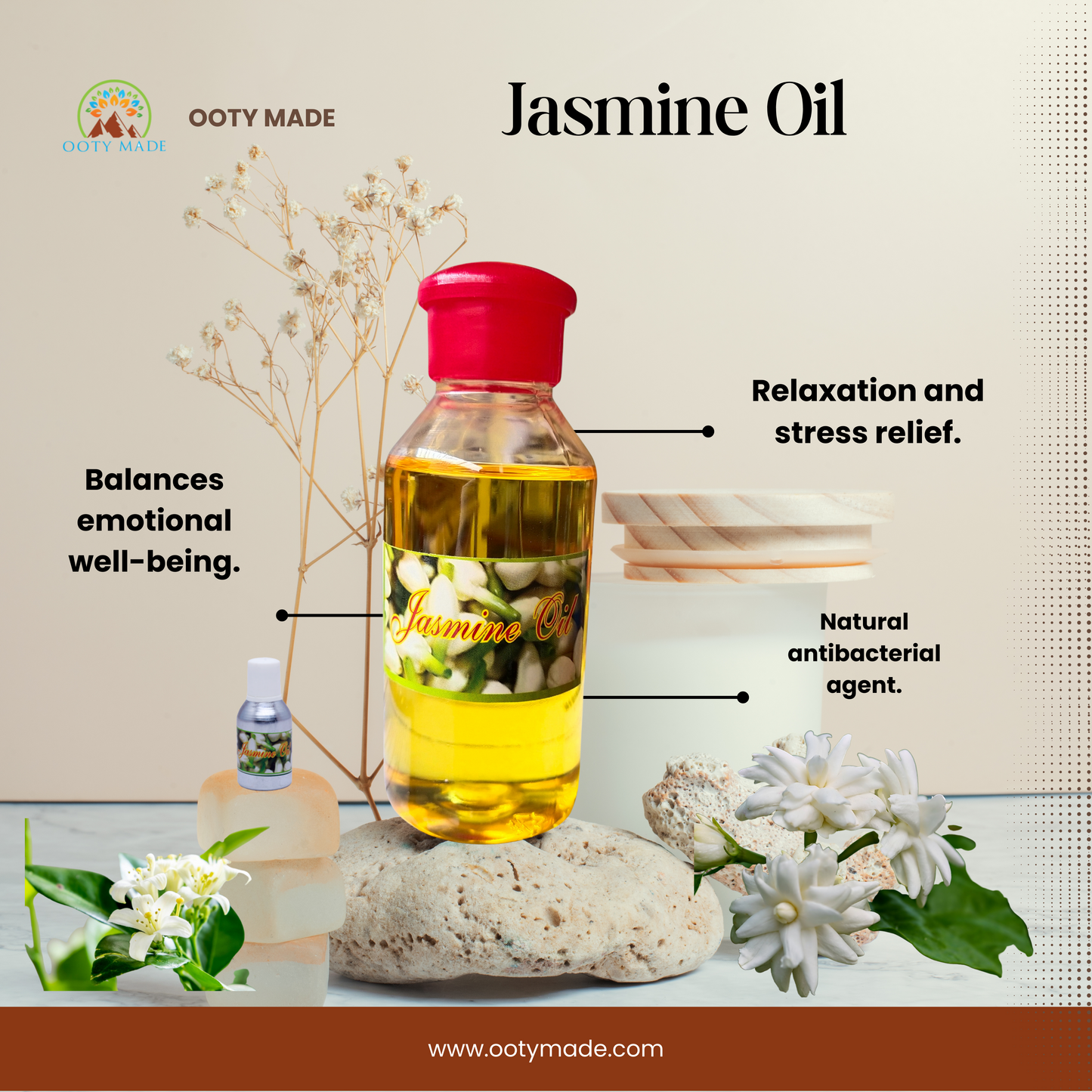
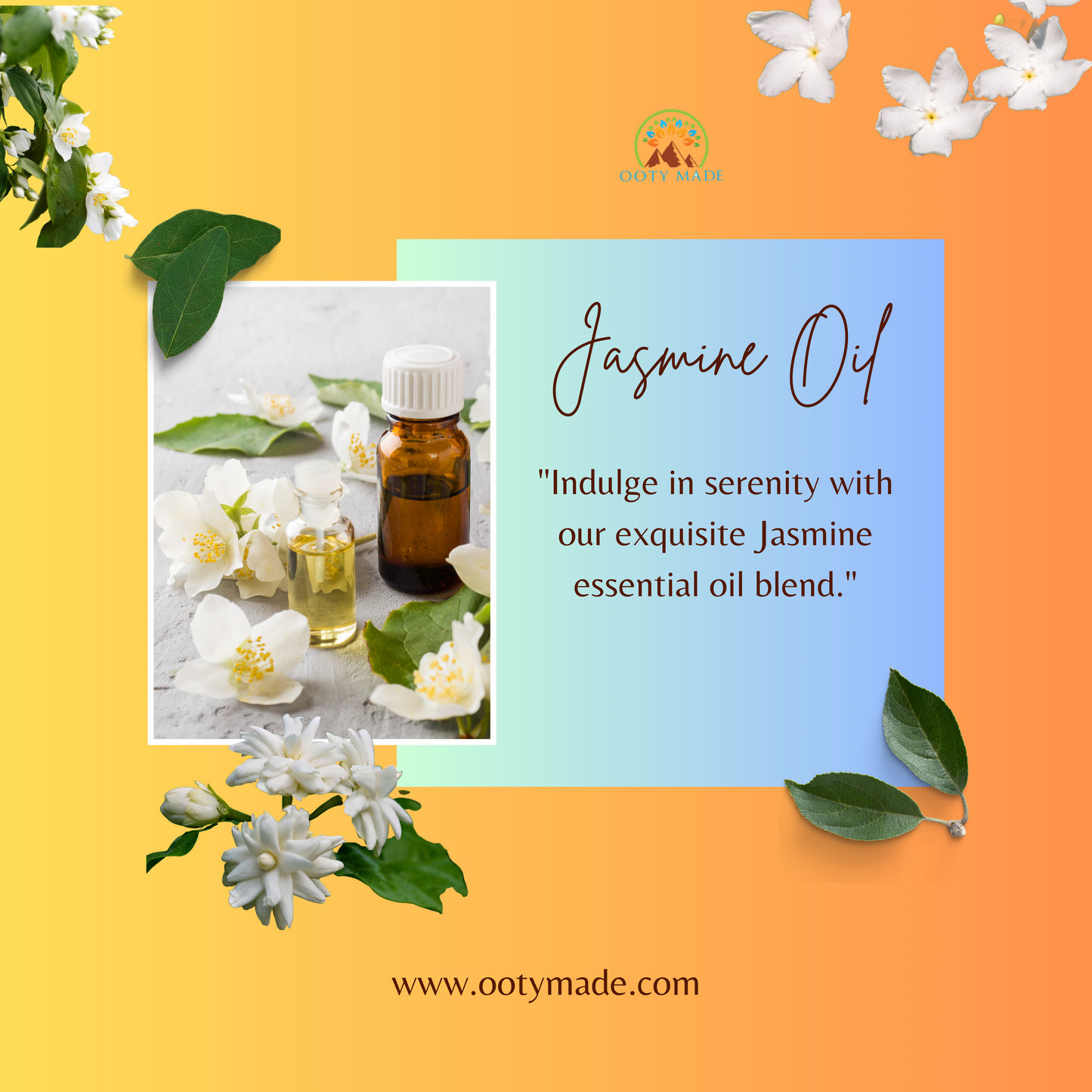
Jasmine — Mogra in most Indian homes — is one of the most revered botanical fragrances in the world and one of the most complex to produce. True jasmine oil requires delicate hand-harvesting at dawn (when the flowers are at peak fragrance) and a solvent or enfleurage extraction process that preserves compounds that steam distillation would destroy.
The result is an oil with a depth and warmth that no synthetic jasmine fragrance can replicate. In India, jasmine has been used in temple offerings, sacred rituals, bridal traditions, aromatherapy, and skincare for thousands of years — and continues to be because it is so deeply loved.
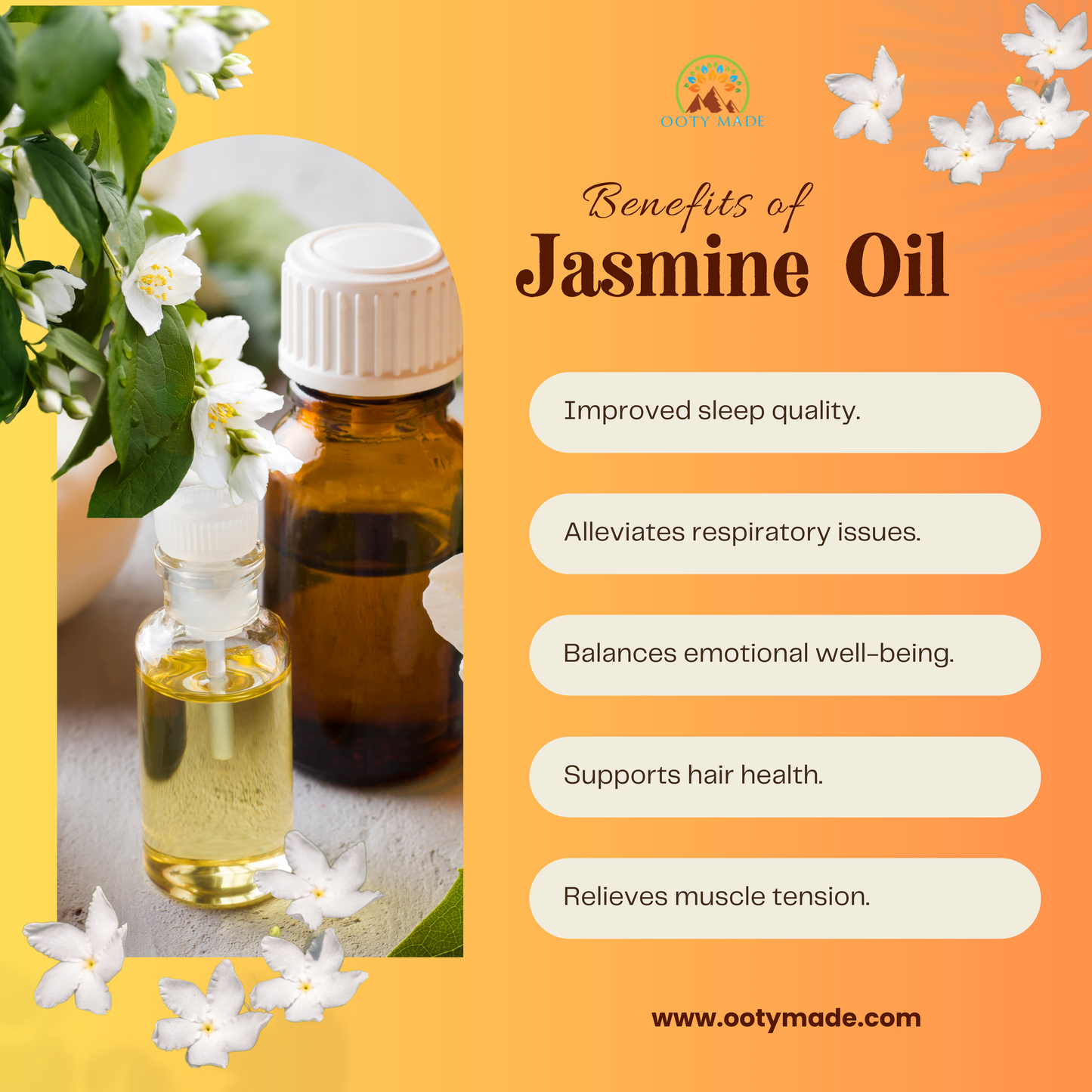
🌸 Deep, True Floral Fragrance — Unlike synthetic jasmine, natural jasmine oil has a warm, complex depth — sweet at the top, slightly earthy underneath, deeply calming throughout.
✨ Skin Brightening and Hydrating — Jasmine oil is traditionally used to keep skin soft and hydrated and to support a more even-looking complexion. Used in Ayurveda for dry, sensitive, and mature skin.
💇 Hair Conditioning and Scalp Health — Traditional use for hair oiling in South India. Jasmine oil conditions the hair shaft, adds fragrance to hair oil blends, and soothes a dry scalp.
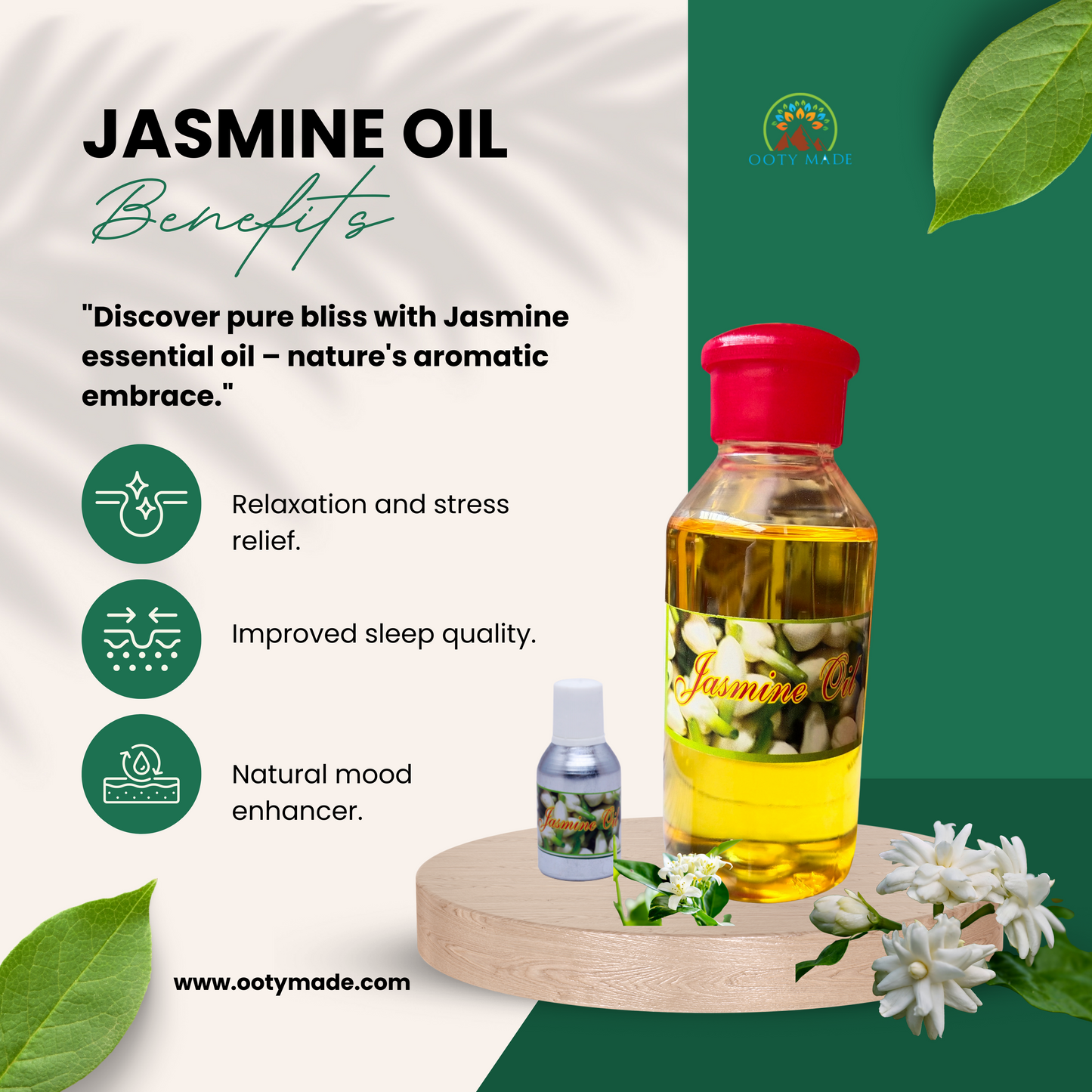
🧘 Aromatherapy and Mood Elevation — Jasmine is traditionally used in aromatherapy for its calming, uplifting fragrance. Diffuse to create a calming, uplifting atmosphere.
🛕 Sacred Rituals and Pooja — Jasmine has deep significance in Hindu and other Indian religious traditions. A few drops in ritual water or on cotton for the puja space creates the authentic floral sacred atmosphere.
💝 Natural Perfume and Romance — One of the great base notes in natural perfumery. Wear diluted on pulse points for a rich, lasting floral fragrance.
❓ Frequently Asked Questions
Is jasmine essential oil the same as jasmine absolute?
They are similar but technically different extraction methods. True jasmine absolute uses solvent extraction to capture the full aromatic profile. Steam-distilled jasmine is sometimes available but misses some heat-sensitive aromatic compounds. Contact us for details on the specific extraction method of our current stock.
How do I use it in aromatherapy?
Add 2–3 drops to a diffuser alone, or blend with sandalwood for a deeper, more meditative atmosphere. The fragrance is powerful — start with fewer drops and adjust.
How do I use it for skin?
Dilute 2–3 drops into 10ml of sweet almond or jojoba carrier oil and apply as a facial serum before bed. Do not apply undiluted to skin.
Why is jasmine oil more expensive than other essential oils?
Jasmine flowers must be hand-harvested at dawn before the sun opens them fully (peak fragrance). Enormous quantities of flowers are required per ml of oil — making it one of the most labour-intensive essential oils to produce.
Is it suitable for all skin types?
Jasmine oil is particularly suited to dry, sensitive, and mature skin. For oily or acne-prone skin, use with caution and in very small quantities as the heavy floral compounds can be occlusive.