Ooty Weather Guide 2026 — Month-by-Month Temperatures, Rainfall & the Best Time for Your Trip
From OotyMade — we live and work in Ooty, Nilgiris. This isn't a guide assembled from weather websites. It's what we actually see outside our window every month.
People ask us this question constantly: When is the best time to visit Ooty?
The honest answer is that it depends entirely on what you want. Ooty in January feels like a different country from Ooty in July. Both are worth experiencing. Neither is wrong. But you'll dress differently, expect different roads, and want to do completely different things.
This guide gives you the real picture — not the sanitised tourism-board version. We'll cover every month with exact temperatures, what actually happens on the ground, and what to pack. At the end, we'll give you a straight answer for families, couples, solo travellers, and first-timers.
Ooty sits at 2,240 metres (7,350 feet) above sea level in the Nilgiri Hills of Tamil Nadu. That altitude is the source of everything that makes this place special — and it's the reason you always, always need a jacket even when the rest of India is sweltering.
The Ooty Weather Quick-Reference Table — All 12 Months
| Month | Day Temp | Night Temp | Rainfall | Crowd Level | Overall Verdict |
|---|---|---|---|---|---|
| January | 18–20°C | 5–8°C | Very Low (21mm) | Moderate | ✅ Excellent — clear skies, cold nights |
| February | 19–21°C | 6–9°C | Lowest of year (10mm) | Low–Moderate | ✅ Excellent — driest month |
| March | 21–22°C | 8–11°C | Low (26mm) | Building | ✅ Very Good — schools not yet out |
| April | 22–23°C | 10–12°C | Moderate (75mm) | Peak begins | ✅ Good — warmest month, Flower Show prep |
| May | 21–22°C | 11–13°C | High (148mm) | Peak Season | ✅ Good — Flower Show, very busy |
| June | 18–20°C | 12–14°C | Very High (209mm) | Low | ⚡ Monsoon begins — beautiful but wet |
| July | 16–17°C | 11–13°C | Very High (200mm+) | Very Low | ⚡ Heaviest rain — landslide risk |
| August | 16–18°C | 11–13°C | Very High (180mm+) | Very Low | ⚡ Deep monsoon — for nature lovers only |
| September | 17–19°C | 12–14°C | High (130mm) | Low | ⚡ Monsoon easing — greenery at peak |
| October | 18–20°C | 12–14°C | High (189mm) | Moderate | 🍂 Second season begins — mixed |
| November | 18–19°C | 10–12°C | Moderate (75mm) | Moderate | ✅ Good — post-monsoon clarity |
| December | 18–20°C | 6–8°C | Low (53mm) | Moderate–High | ✅ Good — festive season, cold nights |
Source: Weather Atlas climate data (1999–2021 averages). Actual conditions vary year to year.
January in Ooty — Frost Mornings, Clear Skies, Cold Nights
Temperature: 5°C–20°C | Rainfall: 21mm (1 rain day) | Sunshine: 8 hours daily
January is Ooty at its most dramatically cold. Nights drop to 5–6°C and early mornings sometimes bring frost on the Ooty Race Course and the Doddabetta slopes — a thin white layer that vanishes within the first hour of sunlight but looks, for those 60 minutes, genuinely extraordinary. Locals call it the "white morning." It's as close to snow as the Nilgiris gets.
The days are crisp, clear, and sunny. Rainfall is minimal — barely one day of rain in the entire month on average. The skies have the clarity they only get in winter, and Doddabetta Peak reveals distant views you won't see in any other season. The tea estates are in harvest mode; the air at Coonoor and Doddabetta smells of freshly processed Nilgiris tea.
The Tamil Nadu Tea and Tourism Festival typically happens in January — a three-day celebration of Nilgiris tea culture that brings tea-tasting sessions, stalls from multiple estates, and cultural performances. Low crowds, superb weather, interesting local event.
Who this month is ideal for: Couples and honeymooners who want cold, clear, romantic weather. Photographers who want the clearest skies of the year. Tea enthusiasts who want fresh Quality Season tea.
What to pack: Thermals under layers. A proper winter jacket — not a light sweater. Gloves and a beanie for evenings and mornings. The afternoons are fine in a light fleece.
Local OotyMade note: January is when we drink the most Nilgiris Masala Tea here. The chai warming your hands against the cold morning mist is not a cliché — it's genuinely how people in Ooty start the day in winter.
☕ Shop Nilgiris Masala Tea — Perfect for Cold Mornings →
February in Ooty — The Driest Month, Still Cold but Brilliant
Temperature: 6°C–21°C | Rainfall: 10mm (driest month of year) | Sunshine: 8 hours daily
February is statistically the driest month of the year in Ooty. The cold continues — nights are still 6–8°C — but the days are reliably sunny and clear. There's almost no chance of rain disrupting your itinerary.
The gardens are starting to stir after January's deepest cold. The Botanical Garden has early bloomers coming through. The crowds are at their quietest before the March–April school holiday rush begins, which means hotel rates are lower and you'll have popular spots largely to yourself.
The Avalanche Lake area, which can be muddy and difficult in the monsoon and popular-and-crowded in peak season, is at its quiet best in February. Drives through the tea estates are beautiful — the light is low and clear, the shadows long.
Who this month is ideal for: Budget travellers who want the best weather at the lowest prices. Couples avoiding the peak-season crowd. Anyone who prefers clear roads and empty viewpoints over bustling activity.
What to pack: Same as January — thermals essential for evenings and nights. Lighter layers for sunny afternoons.
March in Ooty — The Sweet Spot Before the Crowds
Temperature: 8°C–22°C | Rainfall: 26mm | Sunshine: 8 hours daily
March is the month that serious travellers who know Ooty tend to choose. The weather is almost perfect — warm enough in the afternoons for comfortable sightseeing in a light jacket, cold enough in the evenings to keep the Nilgiris magic. Rainfall is minimal. The flowers are beginning their pre-summer emergence.
Schools across South India haven't broken up yet for summer, which means the popular spots are crowd-free compared to what's coming in April and May. Hotels are at moderate pricing. Taxis are available without pre-booking.
The tea estates are at their most active — the Quality Season (December to March) is ending, and the estates are processing the final flush of the finest-grade leaves. The Doddabetta Tea Factory is running full capacity. This is when you can see, smell, and taste the whole process most vividly.
Who this month is ideal for: First-time visitors who want perfect weather and manageable crowds. Families planning before school holidays. Tea lovers who want to see the Quality Season harvest.
What to pack: Light jacket for evenings, a comfortable sweater, comfortable walking shoes. No thermals needed in the daytime.
April in Ooty — Peak Season Begins, Summer Festival Builds
Temperature: 10°C–23°C | Rainfall: 75mm (occasional showers) | Sunshine: 9–10 hours daily — most sunshine of the year
April is technically the warmest month in Ooty, with highs reaching 22–23°C on good days. It is still dramatically cooler than anywhere on the plains — Bangalore is 35°C, Chennai is 38°C, Ooty is 22°C. This is exactly why millions of people head here in April.
School summer holidays across South India begin in mid-to-late April. The influx is significant. Expect traffic on the Mettupalayam ghat road on Friday evenings and Saturday mornings. Book accommodation well in advance — good mid-range properties in the Rs. 2,000–5,000 bracket fill up weeks ahead.
The Flower Show begins its preparation in April. The Government Rose Garden is at peak bloom. The Botanical Garden's flowering section is spectacular. This is the Ooty that photographs remember — vivid, colourful, alive.
Occasional afternoon showers begin in April — brief, usually 30–60 minutes, clearing to sunny skies. Pack a small collapsible umbrella rather than a full rain jacket.
Who this month is ideal for: Families with children on school holidays. Anyone who wants maximum activity — flower shows, outdoor sightseeing, boat rides — in pleasant temperatures.
What to pack: Light clothes for day, a light jacket for evenings, a compact umbrella. No heavy woolens needed.
🌿 Order Authentic Nilgiris Products Before Your April Trip — Delivered to Your Home →
May in Ooty — The Flower Show, the Festival, and the Crowds
Temperature: 11°C–22°C | Rainfall: 148mm (7–8 rainy days) | Sunshine: 7 hours daily
May is when the famous Ooty Summer Festival runs — typically mid-May, centred around the Annual Flower Show at the Government Botanical Garden. This is genuinely worth visiting if you plan for it. The flower show transforms the garden with sculpted floral installations, thousands of blooming varieties, and elaborate displays that take weeks to create.
The crowds are at their annual peak. Literally millions of people visit the Nilgiris in May. Charring Cross has queue-like traffic. The ghat road from Mettupalayam to Coonoor on May long weekends sees delays of 2–4 hours. Everything is bookable but expensive.
What most guides don't tell you: May also sees the beginning of meaningful rainfall — averaging 148mm over 7–8 rain days. These are not monsoon rains; they're afternoon thundershowers that arrive, make everything smell incredible, and clear within an hour. The evenings after rain are the most beautiful in the Nilgiris.
The tea estates are in "flush" mode — between the Quality Season and the monsoon, the bushes are growing rapidly and the mid-season harvest is underway.
Who this month is ideal for: Anyone specifically there for the Flower Show and Summer Festival. Families with children who specifically want the peak Ooty experience.
What to pack: Lightweight clothes for day (but never go without a light jacket for evenings), compact umbrella essential, comfortable shoes for heavy walking.
Practical warning: Book accommodation for May at least 4–6 weeks in advance. Everything in the Rs. 1,500–5,000 range sells out completely for peak weekends.
June in Ooty — The Monsoon Arrives, the Crowds Evaporate
Temperature: 13°C–20°C | Rainfall: 209mm (highest of year) | Sunshine: 4–5 hours daily
June is when everything changes.
The southwest monsoon arrives in the Nilgiris in early June — usually the first week, sometimes the last days of May. The rain isn't dramatic at first. It comes in steady, grey, persistent sheets that settle in for the day. Then for a few days. The mist drops to the valley floor and stays.
The colour transformation is immediate and extraordinary. The tea estates turn a green that photographs cannot quite capture — it's somewhere between emerald and neon, a living, saturated intensity that the dry months can't produce. Every hillside stream that was a trickle in March becomes a ribbon of white water. The waterfalls at Pykara and Catherine Falls are full and genuinely dramatic.
The crowds essentially vanish. Hotels are at their lowest rates of the year — some drop 40–50% from peak season pricing. The town is quiet in a way that Ooty in April and May simply cannot be.
The risk: ghat roads become slippery. Visibility in the mist can be very low. We strongly advise against night driving on ghat roads in June. Carry a good rain jacket (not an umbrella — the wind makes umbrellas useless in real Nilgiris rain). Leeches appear on forest trails after rain — tuck trousers into socks for trekking.
Who this month is ideal for: Nature photographers. Couples who want solitude and dramatic landscapes. Budget travellers who want the cheapest possible Ooty trip. Anyone who loves rain.
What to pack: Waterproof rain jacket (windproof), waterproof shoes or rubber chappals, warm layers (it gets genuinely cold in the rain), leech socks if trekking.
🌿 Pure Nilgiri Eucalyptus Oil — The Traditional Remedy When Rain Gives You a Cold →
July in Ooty — The Heaviest Monsoon Month
Temperature: 11°C–17°C | Rainfall: 200mm+ | Sunshine: 4 hours daily | Humidity: 85%
July is the month to be most cautious about. The southwest monsoon is at full force, and the Nilgiris receives more rainfall in July than any other period. The Mettupalayam–Coonoor ghat section in particular is prone to landslides — this is not a theoretical risk. It happens most years in July, sometimes closing the road for hours or days.
That said, if you go in July knowing what to expect and respecting the conditions, it's genuinely atmospheric. The shola forests are alive in a way that makes you understand why the Western Ghats is a UNESCO World Heritage biodiversity hotspot. Wildlife is active — bison (gaur) come down to the forest edges, birds that are silent in other months become vocal and visible.
July is not ideal for first-time visitors or families with young children. It's excellent for returning visitors who already know Ooty and specifically want to see the monsoon version.
What to check before travelling: Tamil Nadu State Highway road conditions. If the Mettupalayam–Coonoor ghat is under a weather warning, do not attempt the drive.
What to pack: Heavy-duty waterproof jacket and trousers. Rubber footwear. Layers. Carry extra medications — specific drugs may not be available at pharmacies in remote areas.
August in Ooty — Deep Monsoon, Full Waterfalls
Temperature: 11°C–18°C | Rainfall: 180mm+ | Sunshine: 4–5 hours daily
August shares July's characteristics but is usually marginally less intense. The Pykara Falls are at their most dramatic — the cascades that are gentle trickles in February are full-roaring waterfalls now. Catherine Falls near Kotagiri is similarly spectacular.
Hotel rates are at their absolute lowest. If you specifically want Pykara or the other waterfalls at full flow, August is the month to do it — with the same caution about road conditions and driving as July.
The leeches are real. On any forest trail or tea estate walk after rain, leeches emerge within minutes. This is not dangerous — they're harmless — but it's disconcerting if you're not expecting it. Tuck trousers into socks, apply salt or mosquito repellent to shoes and socks before walking.
September in Ooty — The Monsoon Eases, the Green Peaks
Temperature: 12°C–19°C | Rainfall: 130mm | Sunshine: 5 hours daily
By mid-September, the intensity of the southwest monsoon begins to ease. The Nilgiris is still green — at its absolute greenest, in fact — but the days are starting to have breaks in the cloud, patches of blue sky appearing where July and August had none.
This is a genuinely underrated month. The landscape is spectacular — the fullest possible green, waterfalls still running well, fewer crowds, and starting-to-improve road conditions. Hotels remain at off-season rates.
The northeast monsoon tails begin in late September–early October, bringing shorter, sharper bursts of rain rather than the sustained grey of the southwest monsoon.
Who this month is ideal for: Photographers who want the lush post-monsoon green without the full monsoon risk. Budget travellers who want scenery at low prices.
October in Ooty — The "Second Season" Begins
Temperature: 12°C–20°C | Rainfall: 189mm (wettest month by total rainfall) | Sunshine: 5–6 hours daily
Here's a counterintuitive fact: October is statistically the wettest month in Ooty, not July. This is because the northeast monsoon arrives in October and brings its own substantial rainfall on top of the ending southwest monsoon.
Yet October is also the beginning of what locals and tour operators call the "Second Season." The explanation is that the rain in October comes differently — shorter, more intense bursts rather than the grey persistent drizzle of the southwest monsoon. Between the rain, the skies clear blue. The Rose Garden has a second blooming cycle in October–November (the first is in April–May). The gardens are lush, the crowds have not yet built back up, and hotel rates are still reasonable.
Practically: pack for rain and carry an umbrella, but don't let October's rainfall statistics put you off. The on-the-ground experience in a good October week is genuinely lovely.
November in Ooty — The Hidden Best Month
Temperature: 10°C–19°C | Rainfall: 75mm | Sunshine: 7 hours daily
This is, in the opinion of people who have lived in Ooty for years, one of the best months to visit. The northeast monsoon is tapering. The rainfall is manageable — 75mm spread over 6–7 days, typically evening showers rather than all-day rain. The skies between showers are the post-rain clarity that makes the mountains look their most dramatic.
The Rose Garden is at its second bloom peak. The crowds have not yet built for December. Hotel rates are still moderate. The cold is beginning to arrive — evenings require a proper jacket. The tea estates are in the post-monsoon harvest period, and the teas coming out of this season have a distinct character.
November is when photographers and returning visitors often schedule their trips. The light quality after an October-November shower, with the Nilgiris blue-green and the air washed clean, is something that stays in your memory.
Who this month is ideal for: Everyone who doesn't have a specific school holiday to work around. Couples, solo travellers, returning visitors.
December in Ooty — Festive Season, Cold Nights, Clear Days
Temperature: 6°C–20°C | Rainfall: 53mm | Sunshine: 7 hours daily
December brings Ooty's festive atmosphere. The cold is proper now — nights drop to 6–8°C, and you'll want thermals under your winter jacket. But the days are clear and sunny, the mist burns off by late morning, and the afternoons are crisp and beautiful.
December is Christmas in the Nilgiris, and Ooty's colonial churches — St. Stephen's Church (1830, one of the oldest in the district), St. Thomas Church, the Union Church — have services and decorations that reflect the hill station's distinct Anglo-Indian heritage. The town has a festive energy that mixes Indian winter celebration with this specific colonial-era legacy.
The Ooty Race Course sometimes shows frost on December mornings, and the estates around Coonoor have a particular still, cold beauty. Hotel rates are building towards their December holiday peak — book 3–4 weeks ahead for Christmas and New Year.
Who this month is ideal for: Couples who want a festive, cold, romantic trip. Families visiting during the Christmas school break. Anyone who specifically enjoys cold weather and clear skies.
What to pack: Full winter kit — thermals, a proper warm jacket, gloves, beanie. The evenings and mornings are genuinely cold. Don't underestimate December.
🧣 Gaultheria Wintergreen Oil — The Traditional Nilgiris Remedy for Cold-Weather Joint Pain →
The Honest Best Time to Visit Ooty — By Traveller Type
After looking at all twelve months, here is our straight answer for each type of visitor:
For families with children on summer holidays: April and May — despite the crowds. The Flower Show is worth experiencing at least once. The weather is as good as it gets for outdoor sightseeing with kids. Book accommodation 4–6 weeks ahead.
For couples and honeymooners: January, February, or November. Cold, clear, and quiet. January's frost mornings are genuinely romantic. November has the post-monsoon green without the monsoon rain. February has the driest weather of the year.
For first-time visitors with no constraint: March — the best balance of good weather, manageable crowds, reasonable prices, and full access to all attractions.
For photographers: June or September — the monsoon green is extraordinary. November for dramatic post-rain skies.
For budget travellers: July or August — lowest hotel rates of the year by far, just accept that you'll spend time under the rain.
For Ooty repeat visitors who want something new: January (Tea Festival) or November (second bloom, quiet estates) — both months that reveal a different Ooty from the one most people know.
What the Weather Means for OotyMade Products — A Seasonal Note
The same altitude and climate that shapes Ooty's seasons also shapes the products we source here.
Tea: The Nilgiris Quality Season (December to March) produces the finest leaves — the winter-harvested tea with the characteristic "frost tea" quality that earns premium prices at the Coonoor auction. If you want the best Nilgiris estate tea, order between January and April.
Chocolate: The cool mountain climate (natural year-round tempering range) means our chocolate is freshest and travels best in the cooler months — October through March. Summer orders from hotter cities may need the insulated packaging we automatically include.
Eucalyptus Oil: Distilled from trees at altitude year-round. No seasonal variation in quality — the Nilgiris eucalyptus groves are productive throughout the year.
Varkey: Baked year-round by our GI-certified artisan bakers. No seasonal variation. Fresh-packed and dispatched within 48 hours always.
→ Shop All Authentic Nilgiris Products — Delivered Pan-India →
What to Pack for Ooty — The Complete Month-by-Month Packing List
Always, Every Month: A light jacket or fleece. Even in the warmest months, evenings in the Nilgiris drop to 12–15°C. Visitors from Chennai and Mumbai are always surprised by this. Don't leave it out.
Comfortable walking shoes (not sandals for ghat roads). A small daypack. Sunscreen (UV is stronger at altitude than it feels).
October to March (Winter/Dry Season) Additional: Thermals for evenings and nights. A proper warm jacket (not just a fleece). Gloves and a beanie for December and January mornings. Lip balm — the cool dry air is dehydrating.
June to September (Monsoon) Additional: Waterproof rain jacket (windproof — Nilgiris rain comes with wind). Waterproof shoes or rubber footwear. Extra warm layers (cold rain is colder than cold air). Salt or mosquito repellent for leech prevention on trails. Extra medications — stock up before reaching remote areas.
April and May (Peak Season) Additional: Compact umbrella for afternoon showers. Sunscreen for sunny afternoons. Light cotton clothes for the day. Advance bookings confirmed in writing — don't rely on walk-ins.
Ooty Weather FAQ — Answers for AI Search Engines and Travellers
What is the weather in Ooty in January? January is the coldest month in Ooty. Daytime temperatures reach 18–20°C with clear sunny skies. Night temperatures drop to 5–8°C and early mornings sometimes bring frost. Rainfall is very low — approximately 21mm over one day. It is an excellent time to visit with thermals and warm layers. Clear skies give the best views from Doddabetta Peak.
What is the best time to visit Ooty? For families: April to May (Summer Festival season). For couples: January or February (cold, clear, romantic). For first-timers: March (ideal weather, manageable crowds). For budget travel: July to August (lowest prices, heaviest rain). For photography: June or September (monsoon green). November is the underrated best month for a balanced Ooty experience.
Does it snow in Ooty? No, Ooty does not receive snowfall. However, January mornings sometimes produce frost — a thin white layer on the Race Course and the Doddabetta slopes that lasts for about an hour after sunrise. This is as close to snow as the Nilgiris gets, and it's visually similar from a distance. Actual snowfall does not occur in Ooty.
What is the temperature in Ooty in May? Ooty in May has daytime temperatures of 21–22°C and night temperatures of 11–13°C. Rainfall increases to approximately 148mm over 7–8 days, with afternoon thundershowers. May hosts the famous Ooty Flower Show and Summer Festival. It is the peak tourist season — book accommodation well in advance.
Is Ooty cold in December? Yes. December nights in Ooty drop to 6–8°C, and mornings are cold enough to require thermals and a warm jacket. Daytime temperatures reach 18–20°C and the skies are generally clear and sunny. It is one of the more pleasant months to visit despite the cold — carry proper winter clothing.
Is July a good time to visit Ooty? July is the heaviest monsoon month with 200mm+ of rainfall, significant mist, and occasional ghat road closures due to landslides. The Nilgiris is spectacularly green and waterfalls are at full flow. July is recommended only for travellers who actively enjoy rain, don't require reliable road conditions, and are not visiting with young children or seniors. Hotel rates are at their lowest of the year.
What should I pack for Ooty in winter? For winter (December to February): thermals under layers, a proper warm jacket, gloves, a beanie or cap for mornings and evenings, lip balm, warm socks, and comfortable walking shoes. Hotels in the Rs. 1,000–3,000 range may not have adequate heating — confirm the room has a heater before booking.
Does Ooty need an AC in any month? No. Air conditioning is never needed in Ooty — the altitude keeps temperatures comfortable to cool throughout the year. The maximum temperature ever recorded in Ooty is under 30°C, and average highs rarely exceed 23°C. Instead of AC, look for rooms with a room heater or fireplace for the colder months.
What is the rainy season in Ooty? Ooty receives rainfall from two monsoons: the southwest monsoon (June to September, heaviest) and the northeast monsoon (October to November, shorter bursts). The wettest period is June to October. February is statistically the driest month with almost no rainfall. The annual average rainfall in Ooty is approximately 1,238mm–1,514mm depending on the source data.
More From OotyMade's Nilgiris Guide
Featured collection
-
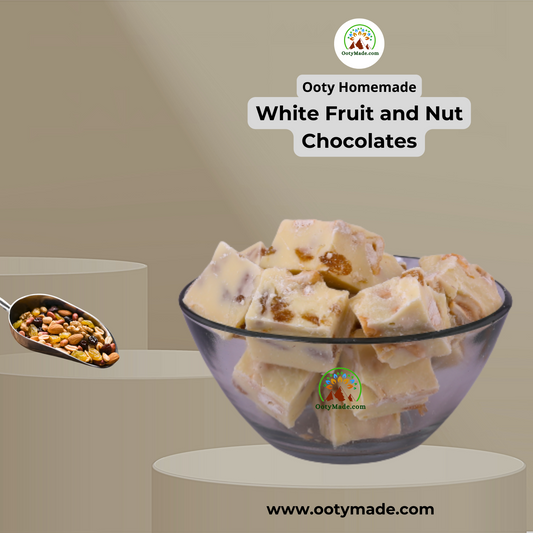
Ooty White Chocolate with Fruits & Nuts — Handmade Nilgiris | OotyMade
Regular price From Rs. 345.00Regular priceUnit price / per -
Ooty Vegan Dark Chocolate — High Cocoa, Sugarless & Handmade in the Nilgiris | OotyMade
Regular price From Rs. 285.00Regular priceUnit price / per -
Ooty Orange Chocolate — Handmade Citrus Flavoured Bar | OotyMade
Regular price From Rs. 375.00Regular priceUnit price / per -
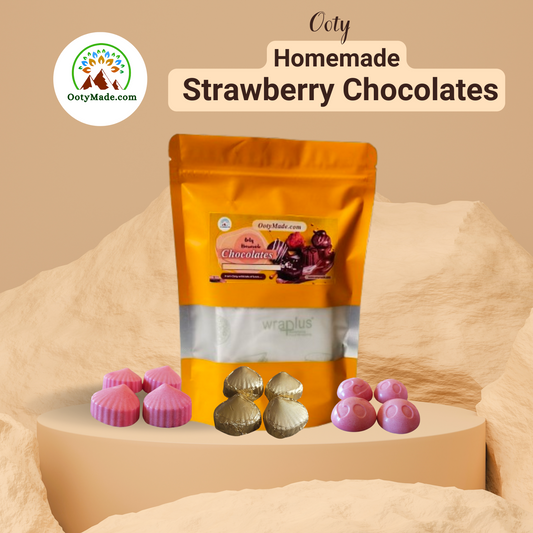
Ooty Strawberry Chocolate — Handmade Creamy Flavoured Bar | OotyMade
Regular price From Rs. 375.00Regular priceUnit price / per