Ooty Travel Guide 2026 — Everything You Need for a Perfect Trip to the Nilgiris
From OotyMade — born and raised in the Nilgiris. Shipping authentic products from Ooty since 2016.

There are travel guides written about a place, and there are travel guides written from a place.
This one is from here.
OotyMade was built in Ooty, runs from Ooty, and has been sourcing authentic Nilgiris products since 2016. The person behind this guide has navigated these ghat roads in monsoon fog, knows which auto driver at Charring Cross is trustworthy, and has watched 3 lakh+ customers discover these mountains through the products we ship to their doors.
What you'll find below is not a list assembled from other travel blogs. It's what we'd actually tell a friend planning their first trip — or their fifth.
Ooty at a Glance — What You're Coming For
Ooty (officially Udhagamandalam, affectionately "Ooty") sits at 2,240 metres above sea level in the Nilgiri Hills of Tamil Nadu, at the point where the Western Ghats and Eastern Ghats meet. The British called it the "Queen of Hill Stations" in the 1800s — they built their summer retreats here to escape the Madras heat — and the name stuck, because it's honest.
What makes Ooty different from every other hill station in India is the specific combination of altitude, biodiversity, and deep-rooted craft tradition that the Nilgiris ecosystem has produced over centuries. The tea here has a brightness that plains-grown tea cannot replicate. The chocolate made at this altitude is naturally tempered. The eucalyptus groves that blanket the slopes — the ones that give the "Blue Mountains" their name and their haze — produce oil with a medicinal potency that lowland eucalyptus simply doesn't carry.
You come for the views and the cool air. You stay — and keep coming back — because this place gets under your skin in a way that's hard to explain to people who haven't been here.
Best Time to Visit Ooty — The Honest Seasonal Breakdown
Most travel guides give you a single "best month." The truth is more interesting than that.
March to June — Peak Season, Best Weather This is when Ooty earns its reputation. Daytime temperatures settle between 18°C and 25°C while the rest of India bakes. The annual Summer Festival runs through May with flower shows, cultural programmes, boat races, and fruit exhibitions that have been happening every year since the 1980s. The Botanical Garden's flower show is genuinely spectacular — it draws visitors from across South India specifically for this.
The trade-off: this is also the most crowded period. Weekends from April onwards see significant traffic on the Mettupalayam ghat road. Pre-book accommodation — hotels in the Rs. 2,000–5,000 range fill up weeks in advance during the May long weekend. Toy Train tickets from Mettupalayam sell out 60–90 days ahead for peak dates.
July to September — Monsoon, For the Right Kind of Traveller Ooty in monsoon is not everyone's holiday. The fog doesn't just roll in — it sits down and stays for days. Rain arrives suddenly and leaves just as suddenly. The ghat roads get slippery and landslides do happen, particularly on the Mettupalayam–Coonoor section in July — check road conditions before travelling and avoid driving after dark.
But for anyone who loves dramatic landscapes, the monsoon is when the Nilgiris reaches its most extravagant green. The tea estates turn a colour that no photograph quite captures. Waterfalls that run thin in summer become full-throated roars. The crowds vanish. Hotels are at their lowest rates of the year.
If you're a photographer, a nature lover who doesn't mind wet feet, or someone who actively enjoys having a destination to yourself — the monsoon is the secret season.
October to February — Cool Season, Clearest Skies October and November bring brief but intense rain as the northeast monsoon passes through. By December, the skies are usually clear and the air is cold in a way that genuinely requires warm clothing. January mornings in Ooty can drop to 5°C, and on rare particularly cold nights, a light frost appears on the hillsides.
This is the best season for clear views from Doddabetta Peak. Tea estates are in harvest mode — fresh, aromatic, the air carrying the distinct green-leaf smell of tea being processed. The Tamil Nadu Tea and Tourism Festival in January is a wonderful, largely tourist-free event worth timing a trip around.
What Every Season Shares: Pack layers regardless of when you visit. Even in April and May, evenings require a light jacket. Altitude changes temperature faster than cities do, and Ooty demonstrates this reliably.
Getting Around Ooty — The Local Transport Reality
Let's start with what's probably the first question in your head.
Uber and Ola do not operate in Ooty. They never have, and there's no indication they will anytime soon. The hill station's taxi industry is run by local unions, which have successfully kept app-based services out. This is the single most important practical thing to know before you arrive.
Here's what actually works:
Local Taxis (Best for Sightseeing) The main taxi stands are at Charring Cross junction and the Main Bus Stand. Local taxis operate on a fixed union rate for sightseeing — approximately Rs. 2,000–2,500 for a full-day sightseeing package covering the main town attractions (Botanical Garden, Ooty Lake, Rose Garden, Doddabetta). Rates for specific routes like Ooty to Coonoor (Rs. 700–900 one way) or Ooty to Pykara (Rs. 600–800 return) are roughly standardised. Always confirm the total before you start, and check that "day charge" includes parking fees at each attraction, as some drivers treat those as separate.
For an outstation trip to Mudumalai, Gudalur, or Kotagiri — negotiate a full-day package rate directly. Expect Rs. 2,500–3,500 for an Innova, Rs. 1,500–2,200 for a sedan, for a full day including fuel.
Auto Rickshaws (Best for Short Hops in Town) Autos are the fastest way to get between points within Ooty town — Market to Charring Cross, Ooty Lake to Botanical Garden, Charring Cross to the bus stand. Minimum fare is around Rs. 50–70 for very short trips, Rs. 100–150 for cross-town. There are no meters — negotiate briefly before you get in. Most auto drivers are honest about town rates; the inflated quotes come when tourists look uncertain, so know your destination and ask with confidence.
There are no autos that go to Botanical Garden or Doddabetta. For those, you need a taxi or a bus.
Local Buses (Best for Budget Travel and the Real Experience) The TNSTC (Tamil Nadu State Transport Corporation) buses are genuinely excellent and cover the main tourist routes at a fraction of taxi prices. To reach Coonoor from Ooty, the bus fare is under Rs. 30. Pykara bus costs Rs. 20–30.
Board from the Main Bus Stand near the market. For Pykara, Wenlock Downs (6th Mile and 9th Mile), and Gudalur, check with the conductor before boarding — these are request stops on through routes, not dedicated services.
Important: there are no local buses to the Botanical Garden, Doddabetta, or the Toy Train station at Ooty (UAM). For those specific spots, take an auto or taxi.
Bike Rentals (For the Independent Traveller) A few licensed rental shops near the bus stand offer bikes for Rs. 500–800 per day. You need a valid driving licence and must wear a helmet — both legally required and genuinely sensible on ghat roads. Self-drive gives you freedom on the quieter back roads to Avalanche or around the Wenlock Downs loop, but treat the ghat sections with respect. These are not city roads.
Top Places to Visit in Ooty — The Local Ranking
The standard tourist circuit and the genuinely unmissable experiences are not always the same list. Here's both.
Botanical Garden — Everyone's First Morning Laid out in 1848 across 55 acres on the slopes of Doddabetta, the Government Botanical Garden is the most visited attraction in Ooty for a reason. Don't dismiss it as a tick-box stop. The garden contains a 20-million-year-old fossil tree trunk. It has the Conservatory, the Lower Garden, the Italian Garden, and the New Garden — each section has its own character. The May Flower Show transforms it entirely. Entry: Rs. 50 for adults, Rs. 25 for children. Timings: 7:30 AM to 6:30 PM.
Doddabetta Peak — The Highest Point in the Nilgiris At 2,637 metres, this is the highest point in the Nilgiri Hills and the best clear-weather viewpoint in the district. On a truly clear morning — which usually means October to February — you can see the plains of Coimbatore and, on exceptional days, traces of the Mysore plateau. The Doddabetta Tea Factory at the top is worth a stop for the "leaf to cup" demonstration and for tasting varieties that aren't available in shops below. Entry: Rs. 30. Timings: 7 AM to 6 PM.
Ooty Lake — More Than You Expect The lake was created by John Sullivan (the British Collector who essentially built Ooty) in 1824. Boating is the main activity, and it's genuinely enjoyable rather than merely touristic — paddle boats, row boats, and the faster motor boats that the kids will want. The lakeside path is good for walking. Arrive between 8 and 9 AM on a weekday to avoid crowds. Weekends in April and May are manic.
The Nilgiri Mountain Railway — Do This If you have not yet done the Toy Train, it is not optional on any reasonable visit to Ooty. See our complete Toy Train and Nearest Railway Station guide → for booking details, timings, and tips. The short version: book on IRCTC, travel First Class, leave from Mettupalayam at 07:10 AM.
Rose Garden — For the Hour Before Sunset The Government Rose Garden on the slopes of Elk Hill is the largest rose garden in India — over 20,000 rose plants, nearly 2,800 varieties, arranged on five terraced levels with Ooty town visible below. It is at its best between March and June, and again in October to November. The evening light on the terraces, with the town below in shadow and the garden still in gold, is the kind of view people frame and hang on walls. Entry: Rs. 50 adults.
Tea Estates — The Real Nilgiris Walking through a working tea estate in the early morning, when the mist is still between the bushes and the picking has just started, is something that stays with you. Several estates allow visitors — the Doddabetta Tea Factory near the peak is the most accessible. For a more authentic experience, drive out towards Coonoor on the B road (not the main highway) and you'll pass estate after estate of Nilgiris tea in its natural growing environment. This is where the tea on your morning table actually comes from.
Pykara Lake and Falls — The Less-Crowded Alternative Located 19 km from Ooty on the Mysore Road, Pykara is the Ooty Lake without the crowds. The boating here is quieter, the surroundings wilder. The Pykara Falls nearby — a stepped waterfall on the river Pykara — are particularly dramatic in the months just after the monsoon. The drive out is one of the most scenic in the district, passing through shola forest and grassland with occasional views across the Silent Valley.
Emerald Lake and Avalanche — For Those Who Want to Go Further Both of these are about 25–28 km from Ooty town and require a forest entry permit from the Nilgiris Forest Division. Emerald Lake sits within the Nilgiris Biosphere Reserve — the water reflects the surrounding tea plantations with a stillness that's genuinely affecting. Avalanche has a small lake and is surrounded by dense shola forest. These are the spots you go when you've seen the tourist circuit and want to see what the Nilgiris actually looks like when nobody's watching.
Wenlock Downs — 6th Mile and 9th Mile Shooting Spots These rolling grassland meadows south of Ooty became famous as Bollywood filming locations — Kuch Kuch Hota Hai's summer camp scenes were filmed at Wenlock Downs. The landscape is open, vast, and deeply un-Indian-looking: more Scottish moorland than South India. The pine forests on the approach and the wide views across the grasslands make for excellent photography. The local names "6th Mile" and "9th Mile" refer to the distance from Ooty town.
Getting Here — The Quick Version
We've written the full dedicated guide on how to reach Ooty, but here's the summary:
- Nearest airport: Coimbatore International (CJB) — 88 km, 3–3.5 hours by taxi (Rs. 2,500–3,500)
- Nearest railway station: Mettupalayam (MTP) — 40 km, 5 hours by Toy Train or 1.5 hours by taxi
- From Bangalore: 275 km, 5–6 hours via Mysore–Masinagudi route
- From Chennai: 540 km, fly to Coimbatore (50 min) then taxi, or take the Nilgiri Express overnight
Where to Stay in Ooty — Budget Range Guide
Ooty has accommodation options across a very wide price range, and the right choice depends entirely on what matters to you.
Budget (Rs. 800–2,000/night): Guesthouses and homestays in the residential areas — Havelock Road, Upper Bazaar Road, and the lanes off Charring Cross. These are clean, locally run, and give you access to the real texture of town life. TTDC (Tamil Nadu Tourism) has a few reliable government-run options that are well-maintained and honestly priced.
Mid-range (Rs. 2,000–6,000/night): The most useful bracket for families and couples who want comfort without the resort price. Several good options exist around the commercial centre and on the roads towards Coonoor. Wyndham Grand, Fortune Sullivan Court, and the Sterling properties are reliable chains in this range.
Heritage and Luxury (Rs. 6,000+/night): The Nilgiris has genuine colonial-era heritage properties — the Fernhills Palace (former summer residence of the Maharaja of Mysore), Savoy Hotel (Ooty's oldest hotel, established 1829), and a number of converted planter bungalows available for full-house rental. These are not just hotels — they're a specific kind of slow, quiet, estate-era experience.
For families with small children: Prioritise proximity to town over scenic remoteness. The ghat roads after dark are not comfortable in unfamiliar territory.
Key booking tip: For April and May, and for October long weekends — book minimum four to six weeks in advance. Everything in the Rs. 1,500–5,000 range fills up completely. Don't rely on walk-ins during peak season.
What to Eat in Ooty — The Local Honest List
Start your mornings at a local darshini. Not the hotel breakfast. A proper South Indian breakfast of idli, sambar, and filter coffee at a local eatery on Commercial Road or near the bus stand will cost you Rs. 50–80 and taste better than anything the hotel can do. The coffee in the Nilgiris is remarkable — this is coffee-growing country, and you can taste it.
Nilgiris cuisine has distinct characteristics. The altitude means you're eating differently here — root vegetables (carrots, beans, turnips) that are genuinely superior to the plains versions. Local bread and bakery items, a heritage of colonial-era baking that has mutated into something distinctly Ooty: thick, slightly sweet white bread, dense chocolate cakes, and an exceptional range of biscuits.
For proper meals: Adyar Ananda Bhavan on Commercial Road is reliable vegetarian South Indian. Hotel Welbeck Garden Restaurant on Club Road does good Tamil Nadu thalis. For non-vegetarian Chettinad cooking, several small local restaurants near the bus stand do it well.
The chocolate question: Several chocolate shops exist in Ooty, and quality varies very widely. See our separate guide on what to buy in Ooty → for the honest breakdown. The short version: look for shops using cocoa butter, not compound.
Street food worth finding: Hot corn from carts near the Botanical Garden entrance. Fresh juice from the stalls near Charring Cross. Ooty's bhutta (roasted corn) sellers are a genuinely pleasant ritual, especially in the cool evenings when the hillside mist comes in.
Ooty Safety — What You Actually Need to Know
Ooty is one of the safest tourist destinations in India. Crime against tourists is rare and reported incidents are minimal. But "safe" doesn't mean "nothing to pay attention to" — the risks here are different from the ones you'd plan for in a city.
Weather-related risks are the primary concern. During monsoon, landslides on ghat roads are a genuine possibility — not a remote one. The Mettupalayam–Coonoor ghat section is particularly susceptible in July. Check the Tamil Nadu state highways website or ask at your accommodation before travelling any ghat road in heavy rain or at night during monsoon months.
Night driving on ghats requires serious caution. Fog on the Mettupalayam and Gudalur ghats can reduce visibility to a few metres. If you're driving yourself, come off the ghat before dark or wait until morning. No Ooty view is worth a ghat road accident in zero-visibility fog.
Wildlife near forest edges at night is real. Bison (gaur) come down to graze near the periphery of Ooty town, particularly on roads towards Pykara and Wenlock Downs after dark. They're large, they're fast when startled, and they don't distinguish between cars. Drive slowly on forest-edge roads at night, and don't walk on unlit paths near the forest boundary after 8 PM.
The monkeys at Doddabetta Peak and the Botanical Garden are bold. Don't hold food visibly in your hand. Keep bags closed. They're not dangerous but they are opportunistic thieves with good spatial awareness and no respect for personal space.
For women travelling alone: Ooty is generally comfortable. The main commercial areas and tourist spots are well-populated during day hours. Standard hill station caution applies — don't accept rides from unmarked vehicles, and avoid remote spots alone after dark.
Medical: The Government Headquarters Hospital near the bus stand is well-equipped for a hill station. For private care, SM Hospital and Govt Nilgiris Medical College are both available. Carry your personal medications because specific branded medicines may not be available in smaller pharmacies. A basic first aid kit is sensible if you're trekking in forest areas.
Practical Ooty — Money, Connectivity, and the Small Things That Matter
Cash vs UPI: Carry both. UPI works reliably in town at shops and restaurants. ATMs are at Commercial Road (SBI, HDFC, ICICI) and Charring Cross. Remote spots — Avalanche, Emerald Lake, forest trailheads — have no ATM or network. Draw cash before heading to forest areas.
Mobile network: BSNL has the best coverage in forest areas (it's the government network and covers more of the Nilgiris than private carriers). Jio and Airtel work well in town and on main roads. Network drops in tunnels and dense forest — this is normal.
Plastic-free district: Ooty is officially a plastic-carry-bag-free zone. Fines apply. Carry a cloth bag or small backpack for shopping and market visits. Vendors at the market will politely but firmly decline to give you plastic bags. This is one of the things that makes Ooty nicer than most tourist destinations.
Currency exchange: Authorised money changers are available near the Casino Hotel junction for foreign currency. Most hotels can also exchange currency.
Photography at natural spots: No restrictions in public areas and gardens. At tribal areas and villages, ask before photographing people — the Toda community in particular has expressed preferences about not being photographed as a tourist attraction.
Emergency contacts:
- Ooty Police Control: 0423-2445555
- Government Headquarters Hospital: 0423-2444533
- Fire Station: 0423-2442345
- Tamil Nadu Tourism (Hotel Tamil Nadu): 0423-2443370
What to Pack for Ooty — The Non-Obvious List
Every guide says "carry warm clothes" and then lists winter jacket, umbrella, and good shoes. That part is correct. Here's what they don't mention:
Motion sickness medication. If anyone in your group has even a mild sensitivity, pack Avomine or similar before you attempt the ghat. The Kallar–Coonoor section specifically — 14 hairpin bends in roughly 30 km — is one of India's most winding mountain road stretches. It is beautiful. It is also very twisty. Nilgiri eucalyptus oil on a handkerchief, inhaled before and during the climb, is the traditional local remedy and it genuinely works.
A good power bank. Sightseeing days in Ooty are full days, and shooting photos and video on a phone all day drains batteries faster than charging spots appear. Many forest area spots have no power access at all.
Small-denomination notes. Entry fees at gardens and viewpoints are Rs. 30–50. Parking attendants, auto drivers, and roadside snack sellers don't carry change for Rs. 500 notes. Come armed with Rs. 10–100 notes.
Lip balm and sunscreen. The altitude means UV is stronger than it feels, and the cool air is drying. Both get used more than expected.
A Note on What to Take Home
We are an Ooty products company, so naturally we want you to buy what we sell. But more than that, we genuinely don't want you to make the mistake so many visitors make — buying whatever is available at the last minute from the first shop near the bus stand.
The authentic products worth buying from Ooty are: GI-tagged Varkey from certified bakers, handmade chocolate using real cocoa butter, single-estate Nilgiris tea from named gardens, and pure steam-distilled eucalyptus oil. Everything in our shop is sourced from verified producers in the Nilgiris, packed fresh, and ships to every part of India.
OotyMade's Recommended 3-Day Ooty Itinerary
Day 1 — The Classic Circuit Morning: Botanical Garden (2 hrs, 7:30–9:30 AM before crowds arrive). Late morning: Doddabetta Peak, tea tasting at the factory. Afternoon: Ooty Lake boating, lakeside walk. Evening: Rose Garden at golden hour. Dinner: Local darshini on Commercial Road.
Day 2 — Beyond the Town Early morning: Pykara Lake and Falls (take the Mysore Road, first 20 km is beautiful). Late morning: Continue to Emerald Lake (permit required — organise the day before from the Forest Division office near the bus stand). Afternoon: Return via the quieter estate road through tea gardens. Evening: Charring Cross market, shopping.
Day 3 — Coonoor and the Toy Train Take the local bus or taxi to Coonoor (17 km, excellent road). Sim's Park botanical garden (smaller and quieter than Ooty's). Dolphin's Nose viewpoint. Lamb's Rock. Tea estate walk. Return by the narrow-gauge train from Coonoor to Ooty (45 min, book in advance — a shorter, quieter version of the full Toy Train experience without the need to go all the way to Mettupalayam). Evening: Final round of shopping and the Nilgiris night market if you're here on a Wednesday.
More From the OotyMade Travel Hub
- How to Reach Ooty — Nearest Airport, Railway Station, Taxi Fares →
- What to Buy in Ooty — The Complete Insider Shopping Guide →
- Complete Ooty Sightseeing Index — All Sub-Guides →
- Nilgiri Tea vs Darjeeling vs Assam — Full Comparison →
- Ooty Summer Products — What to Order Before Your Trip →
- Nilgiri Oil: 12 Uses Every Ooty Visitor Should Know →
Frequently Asked Questions — Ooty Travel Guide 2026
Is Ooty worth visiting in 2026? Absolutely. Despite being one of India's most visited hill stations, the Nilgiris has held onto more of its character than most equivalent destinations. The tea estates, the shola forests, the colonial architecture, the endemic wildlife — these aren't constructed tourist attractions. They're the landscape itself. The Summer Festival in May makes April–June the most vibrant period. For quieter visits, October to February offers the best skies and most pleasant temperatures.
How many days are enough for Ooty? The standard answer is 2–3 days for the classic circuit. A more honest answer is that you can fill 5–6 days comfortably if you go beyond the main attractions to the forest lakes, the Coonoor and Kotagiri extensions, and the quieter valleys. First-time visitors: 3 days minimum. Returning visitors who want to go deeper: 5 days is better.
Is Ooty safe for solo female travellers? Yes — Ooty has a low crime rate compared to most Indian tourist destinations. The main commercial areas are busy and well-lit during the day. Standard precautions apply: avoid unlit paths near the forest edge after dark, use pre-negotiated taxis rather than unmarked vehicles, and trust your instincts in any situation that feels off. Most locals are accustomed to tourists and interactions are generally friendly.
What is the temperature in Ooty in summer? During the Ooty summer (March to June), daytime temperatures are typically 18°C to 25°C. Evenings drop to 12°C to 16°C, requiring a light jacket even in the warmest months. Nights in May can be 10–14°C. This is roughly 15–20°C cooler than Coimbatore or Chennai at the same time of year, which is the entire point of going.
Do I need an e-pass to enter Ooty? The Ooty e-pass system has been in operation for vehicle entry management during peak seasons. Requirements change — check the current status before your trip. Our dedicated Ooty E-Pass Guide → has the latest update.
Is it safe to drink tap water in Ooty? No. Use bottled water or carry a filtration bottle. The municipal water supply is treated but tap water quality varies. All restaurants and tea shops use filtered or boiled water for cooking — the risk is specifically from direct tap drinking.
What is the budget for a 3-day Ooty trip? Budget traveller (bus transport, guesthouse, local food): Rs. 1,500–2,500 per day per person. Mid-range (taxi sharing, mid-range hotel, mix of restaurant meals): Rs. 3,000–6,000 per day per person. Comfortable family of four (private taxi, 3-star hotel, all meals): Rs. 8,000–15,000 per day total. These are honest estimates for 2026 — not aspirational minimums.
Can I find good vegetarian food in Ooty? Yes — Ooty is excellent for vegetarian eating. South Indian vegetarian food is the staple cuisine, and the local dosas, idlis, rice plates, and curries are genuinely good. Several restaurants also serve North Indian and Chinese options. Finding purely vegetarian restaurants is easy in the main town area.
Featured collection
-
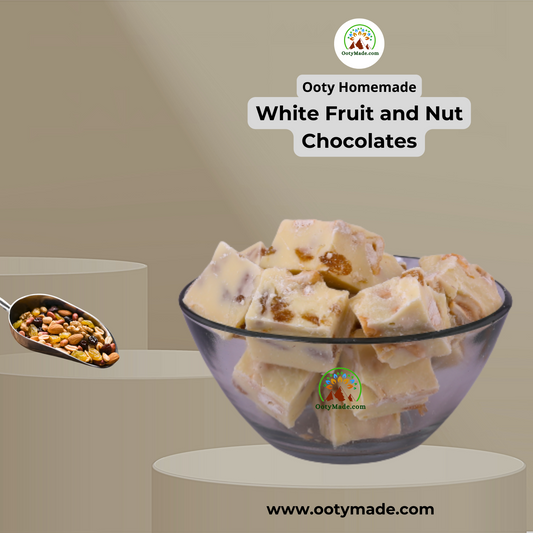
Ooty White Chocolate with Fruits & Nuts — Handmade Nilgiris | OotyMade
Regular price From Rs. 345.00Regular priceUnit price per -
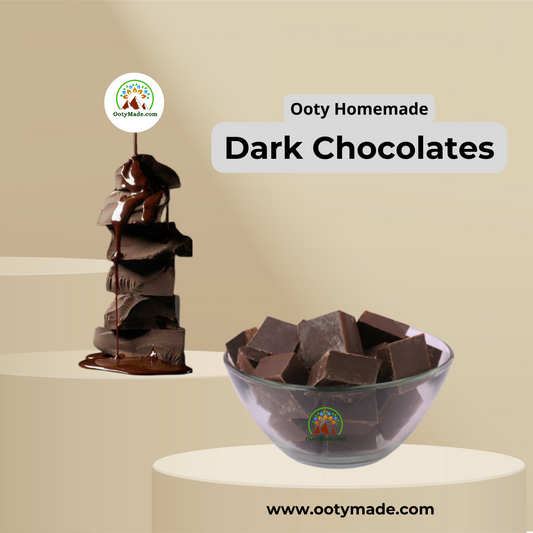
Ooty Vegan Dark Chocolate — High Cocoa, Sugarless & Handmade in the Nilgiris | OotyMade
Regular price From Rs. 285.00Regular priceUnit price per -
Ooty Orange Chocolate — Handmade Citrus Flavoured Bar | OotyMade
Regular price From Rs. 375.00Regular priceUnit price per -
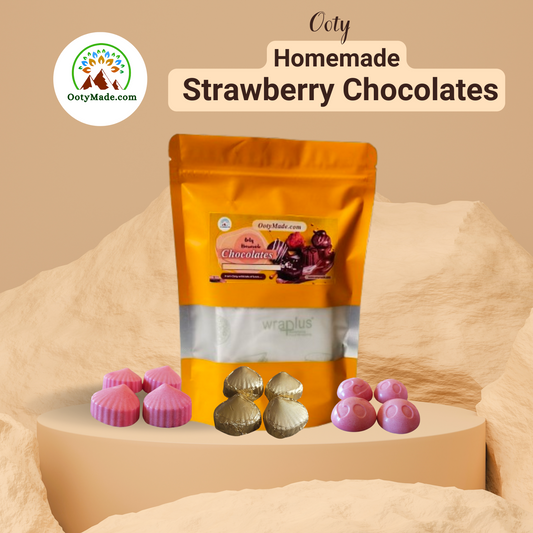
Ooty Strawberry Chocolate — Handmade Creamy Flavoured Bar | OotyMade
Regular price From Rs. 375.00Regular priceUnit price per